


Gifting Made Simple
Give the Gift of ChoiceClick below to purchase a Prairie Mall eGift Card that can be used at participating retailers at Prairie Mall.Buy Gift CardHome
Adjusting to Reality: Beyond 'State Versus Market' Economic Development
Coles
Loading Inventory...
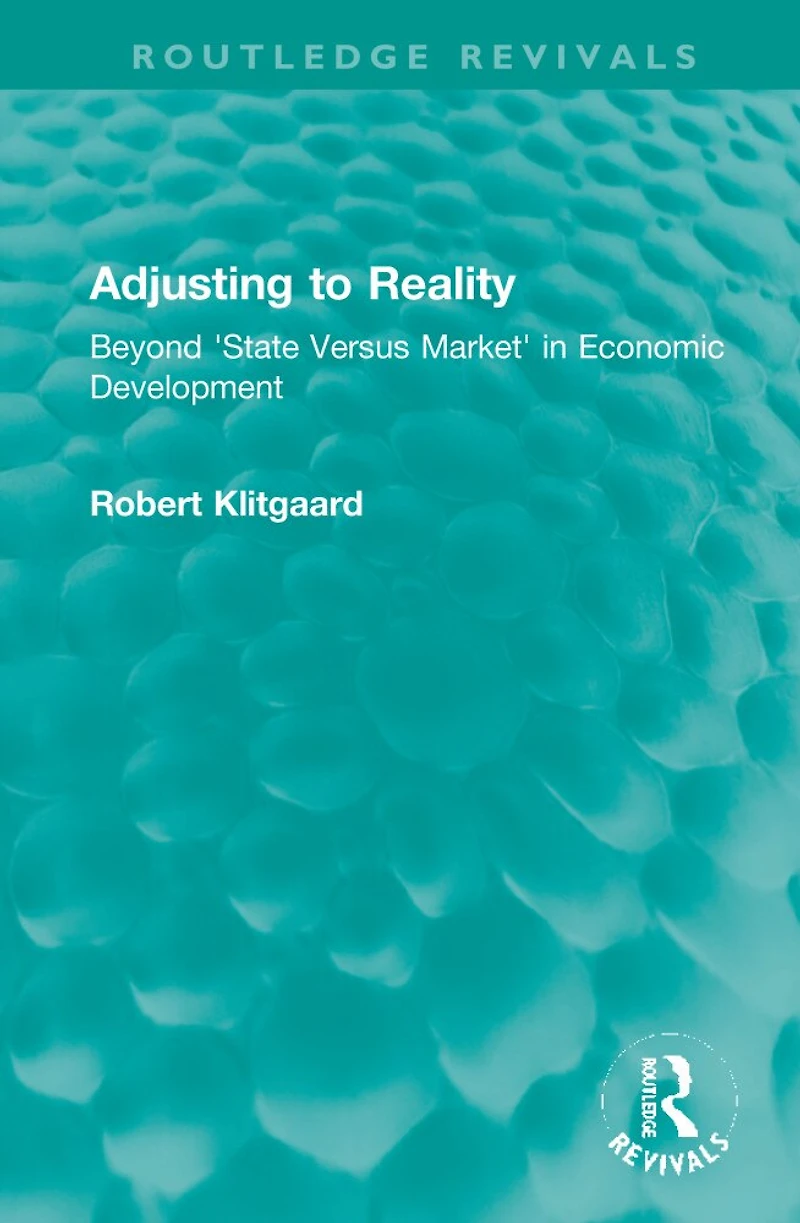

Adjusting to Reality: Beyond 'State Versus Market' Economic Development in Grande Prairie, AB
Current price: $187.95
Coles
Adjusting to Reality: Beyond 'State Versus Market' Economic Development in Grande Prairie, AB
Current price: $187.95
Loading Inventory...
Size: Hardcover
*Product information and pricing may vary - to confirm current pricing, availability, shipping, and return information please contact Coles. In the event of a pricing discrepancy, the retailer's price will apply.
Originally published in 1991, Robert Klitgaard's classic book addresses questions of enduring relevance in a lively and insightful way. Bribes, tribes, and markets that fail-these are the realities in many developing countries. The usual strategies for reform-be they capitalist or socialist-have failed to address them effectively. What is to be done when economic reforms leave the poor behind or when when new constitutions and elections are undercut by inefficient bureaucracies, overcentralization, and corruption? And what to do about persistent ethnic inequalities within developing countries? The book provides inspiring examples from around the world, as well as analytical frameworks to guide inclusive policy discussion. Theorists will enjoy the novel uses of industrial economics, the theory of the firm, and the economics of discrimination. The book highlights overlooked causes of underdevelopment: imperfect information and weak information processing in individuals and institutions. In the preface, the former President of Panama, Dr. Nicolás Ardito Barletta, writes: "Poverty, Klitgaard argues, is-and should be-a principal concern of development strategists, but policy makers and analysts will continue to run from pillar to post in their search for a cure unless they can adjust their development schemes to reality...." "The new approach that the author proposes is based on two fundamental principles. One is that the proper choice of economic strategies cannot be determined in the abstract but depends on particular circumstances... The other is that information is at the heart of problems in the real world of the developing countries... Klitgaard offers examples from Bolivia, Brazil, India, Indonesia, Malaysia, Pakistan, Peru, and the Philippines to make his point. "The author suggests creative ways in which the state and citizens themselves can solve their own 'inevitably unique problems.' One of the key tasks, in Klitgaard's view, is to ensure that environments are rich in information. This volume offers a broad framework for policy analysis that moves us closer to intelligent solutions to the real problems of the real poor in the modern world."
Originally published in 1991, Robert Klitgaard's classic book addresses questions of enduring relevance in a lively and insightful way. Bribes, tribes, and markets that fail-these are the realities in many developing countries. The usual strategies for reform-be they capitalist or socialist-have failed to address them effectively. What is to be done when economic reforms leave the poor behind or when when new constitutions and elections are undercut by inefficient bureaucracies, overcentralization, and corruption? And what to do about persistent ethnic inequalities within developing countries? The book provides inspiring examples from around the world, as well as analytical frameworks to guide inclusive policy discussion. Theorists will enjoy the novel uses of industrial economics, the theory of the firm, and the economics of discrimination. The book highlights overlooked causes of underdevelopment: imperfect information and weak information processing in individuals and institutions. In the preface, the former President of Panama, Dr. Nicolás Ardito Barletta, writes: "Poverty, Klitgaard argues, is-and should be-a principal concern of development strategists, but policy makers and analysts will continue to run from pillar to post in their search for a cure unless they can adjust their development schemes to reality...." "The new approach that the author proposes is based on two fundamental principles. One is that the proper choice of economic strategies cannot be determined in the abstract but depends on particular circumstances... The other is that information is at the heart of problems in the real world of the developing countries... Klitgaard offers examples from Bolivia, Brazil, India, Indonesia, Malaysia, Pakistan, Peru, and the Philippines to make his point. "The author suggests creative ways in which the state and citizens themselves can solve their own 'inevitably unique problems.' One of the key tasks, in Klitgaard's view, is to ensure that environments are rich in information. This volume offers a broad framework for policy analysis that moves us closer to intelligent solutions to the real problems of the real poor in the modern world."
You May Also Like









Find at Prairie Mall in Grande Prairie, AB
Visit at Prairie Mall in Grande Prairie, AB