


Gifting Made Simple
Give the Gift of ChoiceClick below to purchase a Prairie Mall eGift Card that can be used at participating retailers at Prairie Mall.Buy Gift CardHome
Address in Portuguese and Spanish: Studies in Diachrony and Diachronic Reconstruction
Coles
Loading Inventory...
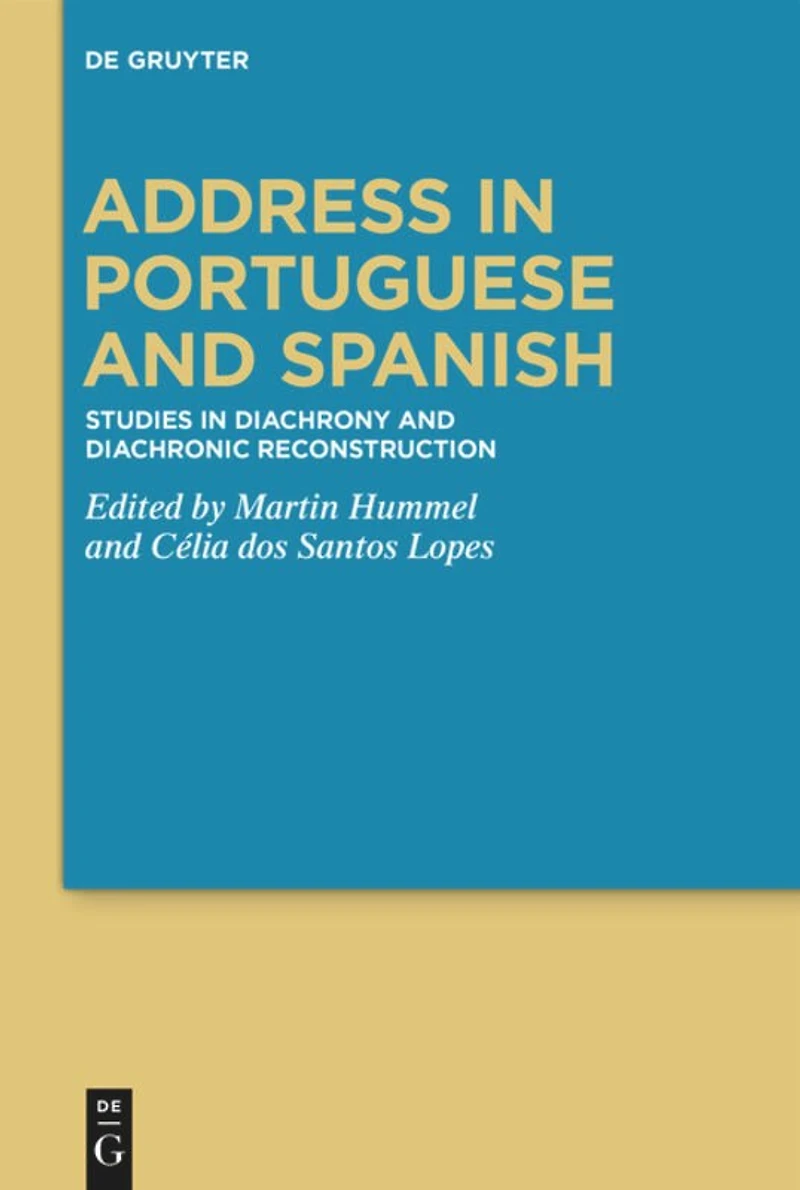
Address in Portuguese and Spanish: Studies in Diachrony and Diachronic Reconstruction
By None
Current price: $158.99
Coles
Address in Portuguese and Spanish: Studies in Diachrony and Diachronic Reconstruction
By None
Current price: $158.99
Loading Inventory...
Size: Hardcover
*Product information and pricing may vary - to confirm current pricing, availability, shipping, and return information please contact Coles. In the event of a pricing discrepancy, the retailer's price will apply.
The volume provides the first systematic comparative approach to the history of forms of address in Portuguese and Spanish, in their European and American varieties. Both languages share a common history—e.g., the personal union of Philipp II of Spain and Philipp I of Portugal; the parallel colonization of the Americas by Portugal and Spain; the long-term transformation from a feudal to a democratic system—in which crucial moments in the diachrony of address took place. To give one example, empirical data show that the puzzling late spread of Sp. usted ‘you (formal, polite)’ and Pt. você ‘you’ across America can be explained for both languages by the role of the political and military colonial administration. To explore these new insights, the volume relies on an innovative methodology, as it links traditional downstream diachrony with upstream diachronic reconstruction based on synchronic variation. Including theoretical reflections as well as fine-grained empirical studies, it brings together the most relevant authors in the field.
The volume provides the first systematic comparative approach to the history of forms of address in Portuguese and Spanish, in their European and American varieties. Both languages share a common history—e.g., the personal union of Philipp II of Spain and Philipp I of Portugal; the parallel colonization of the Americas by Portugal and Spain; the long-term transformation from a feudal to a democratic system—in which crucial moments in the diachrony of address took place. To give one example, empirical data show that the puzzling late spread of Sp. usted ‘you (formal, polite)’ and Pt. você ‘you’ across America can be explained for both languages by the role of the political and military colonial administration. To explore these new insights, the volume relies on an innovative methodology, as it links traditional downstream diachrony with upstream diachronic reconstruction based on synchronic variation. Including theoretical reflections as well as fine-grained empirical studies, it brings together the most relevant authors in the field.
You May Also Like









More About Coles at Prairie Mall
11801 100 St #104, Grande Prairie, AB T8V 3Y2, Canada
Find Coles at Prairie Mall in Grande Prairie, AB
Visit Coles at Prairie Mall in Grande Prairie, AB