


Gifting Made Simple
Give the Gift of ChoiceClick below to purchase a Prairie Mall eGift Card that can be used at participating retailers at Prairie Mall.Buy Gift CardHome
Adaptive Techniques for Mixed Signal System on Chip
Coles
Loading Inventory...
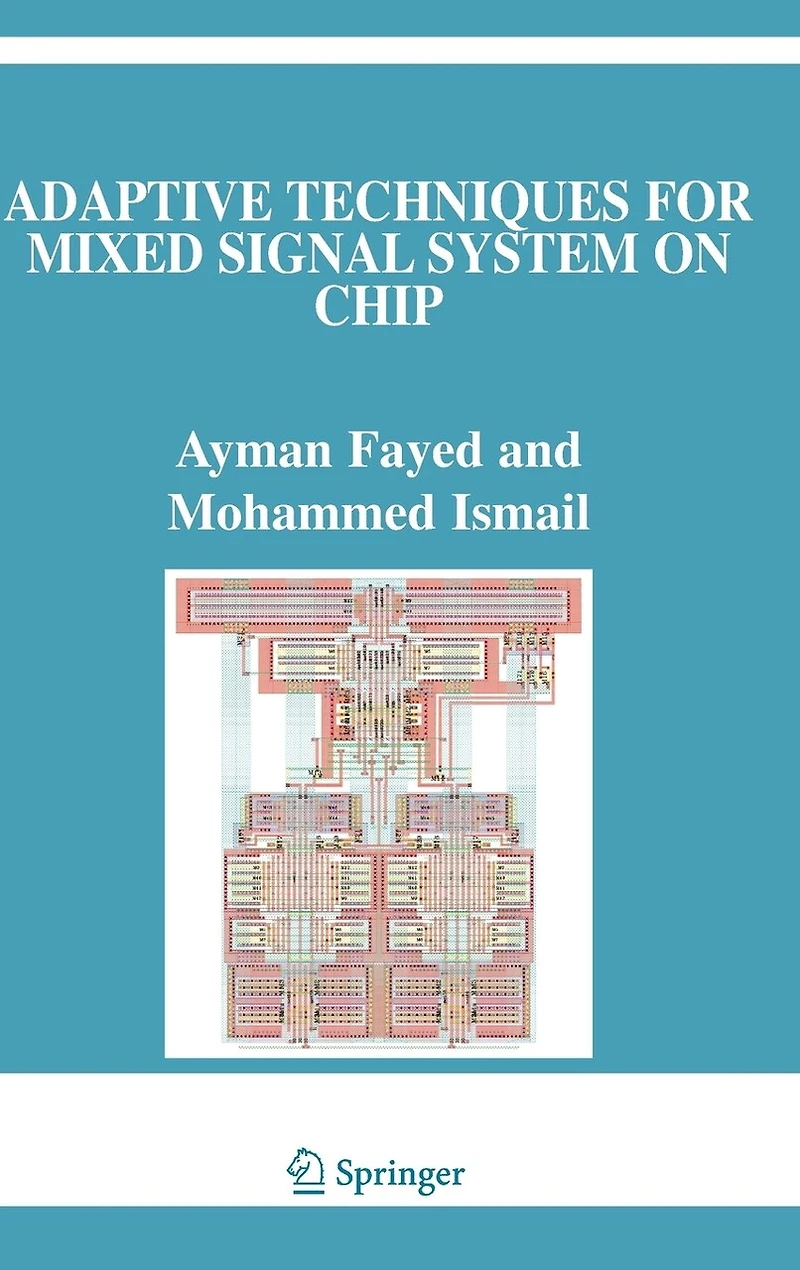
Adaptive Techniques for Mixed Signal System on Chip in Grande Prairie, AB
Current price: $160.95
Coles
Adaptive Techniques for Mixed Signal System on Chip in Grande Prairie, AB
Current price: $160.95
Loading Inventory...
Size: Hardcover
*Product information and pricing may vary - to confirm current pricing, availability, shipping, and return information please contact Coles. In the event of a pricing discrepancy, the retailer's price will apply.
Adaptive Techniques for Mixed Signal Sytem on Chip discusses the concept of adaptation in the context of analog and mixed signal design along with different adaptive architectures used to control any system parameter. The first part of the book gives an overview of the different elements that are normally used in adaptive designs including tunable elements as well as voltage, current, and time references with an emphasis on the circuit design of specific blocks such as voltage-controlled transconductors, offset comparators, and a novel technique for accurate implementation of on chip resistors. While the first part of the book addresses adaptive techniques at the circuit and block levels, the second part discusses adaptive equalization architectures employed to minimize the impact of ISI (Intersymbol Interference) on the quality of received data in high-speed wire line transceivers. It presents the implementation of a 125Mbps transceiver operating over a variable length of Category 5 (CAT-5) Ethernet cable as an example of adaptive equalizers.
Adaptive Techniques for Mixed Signal Sytem on Chip discusses the concept of adaptation in the context of analog and mixed signal design along with different adaptive architectures used to control any system parameter. The first part of the book gives an overview of the different elements that are normally used in adaptive designs including tunable elements as well as voltage, current, and time references with an emphasis on the circuit design of specific blocks such as voltage-controlled transconductors, offset comparators, and a novel technique for accurate implementation of on chip resistors. While the first part of the book addresses adaptive techniques at the circuit and block levels, the second part discusses adaptive equalization architectures employed to minimize the impact of ISI (Intersymbol Interference) on the quality of received data in high-speed wire line transceivers. It presents the implementation of a 125Mbps transceiver operating over a variable length of Category 5 (CAT-5) Ethernet cable as an example of adaptive equalizers.
You May Also Like










Find at Prairie Mall in Grande Prairie, AB
Visit at Prairie Mall in Grande Prairie, AB