


Gifting Made Simple
Give the Gift of ChoiceClick below to purchase a Prairie Mall eGift Card that can be used at participating retailers at Prairie Mall.Buy Gift CardHome
Accounting and Accountability for Social Inclusion: Interdisciplinary Dialogues a More Sustainable World
Coles
Loading Inventory...
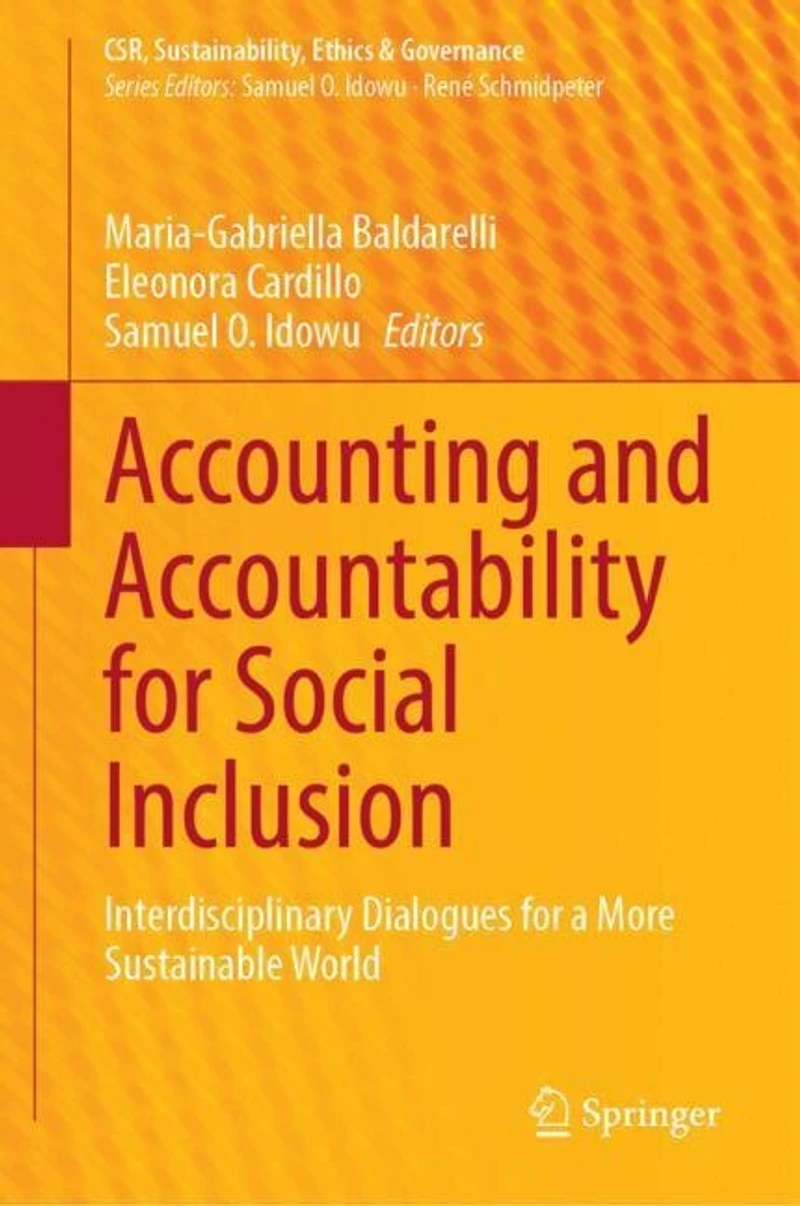
Accounting and Accountability for Social Inclusion: Interdisciplinary Dialogues a More Sustainable World
By None
Current price: $233.95
Coles
Accounting and Accountability for Social Inclusion: Interdisciplinary Dialogues a More Sustainable World
By None
Current price: $233.95
Loading Inventory...
Size: Hardcover
*Product information and pricing may vary - to confirm current pricing, availability, shipping, and return information please contact Coles. In the event of a pricing discrepancy, the retailer's price will apply.
This book explores accounting and accountability for social inclusion through interdisciplinary perspectives. It begins by examining the potential of accounting and accountability to mediate in various areas, analyzing the dialogue among accounting, accountability, and other theories to contribute to social inclusion and foster a more sustainable society. The book delves into the interplay between accounting, accountability, and Nature-Based Solutions (NBS), and social inclusion, as well as the roles of technological innovation and artificial intelligence in promoting social inclusion. Additionally, it considers the anthropological and ethical foundations of accounting, accountability, and social inclusion. The book is divided into three parts. The first part provides a general overview, proposing theoretical frameworks aimed at evaluating and measuring social inclusion, and encouraging accounting and accountability in sustainable, innovative business models. The second part focuses on empirical experiences in specific sectors, such as cultural institutions. The third part is dedicated to the interdisciplinary dialogues for social inclusion involving marginalized communities and best practice in higher education. The book offers guidance on selecting among major worthy causes and measuring the beneficial outcomes achieved for both recipients and socially responsible entities. It is intended for practitioners, researchers, and senior undergraduate and graduate students in business, accounting, accountability, ethics, corporate social responsibility, sustainability, social inclusion, and management courses. Students in related disciplines such as economics, social sciences, and humanities will also find it valuable.
This book explores accounting and accountability for social inclusion through interdisciplinary perspectives. It begins by examining the potential of accounting and accountability to mediate in various areas, analyzing the dialogue among accounting, accountability, and other theories to contribute to social inclusion and foster a more sustainable society. The book delves into the interplay between accounting, accountability, and Nature-Based Solutions (NBS), and social inclusion, as well as the roles of technological innovation and artificial intelligence in promoting social inclusion. Additionally, it considers the anthropological and ethical foundations of accounting, accountability, and social inclusion. The book is divided into three parts. The first part provides a general overview, proposing theoretical frameworks aimed at evaluating and measuring social inclusion, and encouraging accounting and accountability in sustainable, innovative business models. The second part focuses on empirical experiences in specific sectors, such as cultural institutions. The third part is dedicated to the interdisciplinary dialogues for social inclusion involving marginalized communities and best practice in higher education. The book offers guidance on selecting among major worthy causes and measuring the beneficial outcomes achieved for both recipients and socially responsible entities. It is intended for practitioners, researchers, and senior undergraduate and graduate students in business, accounting, accountability, ethics, corporate social responsibility, sustainability, social inclusion, and management courses. Students in related disciplines such as economics, social sciences, and humanities will also find it valuable.
You May Also Like









More About Coles at Prairie Mall
11801 100 St #104, Grande Prairie, AB T8V 3Y2, Canada
Find Coles at Prairie Mall in Grande Prairie, AB
Visit Coles at Prairie Mall in Grande Prairie, AB