


Gifting Made Simple
Give the Gift of ChoiceClick below to purchase a Prairie Mall eGift Card that can be used at participating retailers at Prairie Mall.Buy Gift CardHome
A People's History of India 3: The Vedic Age
Coles
Loading Inventory...
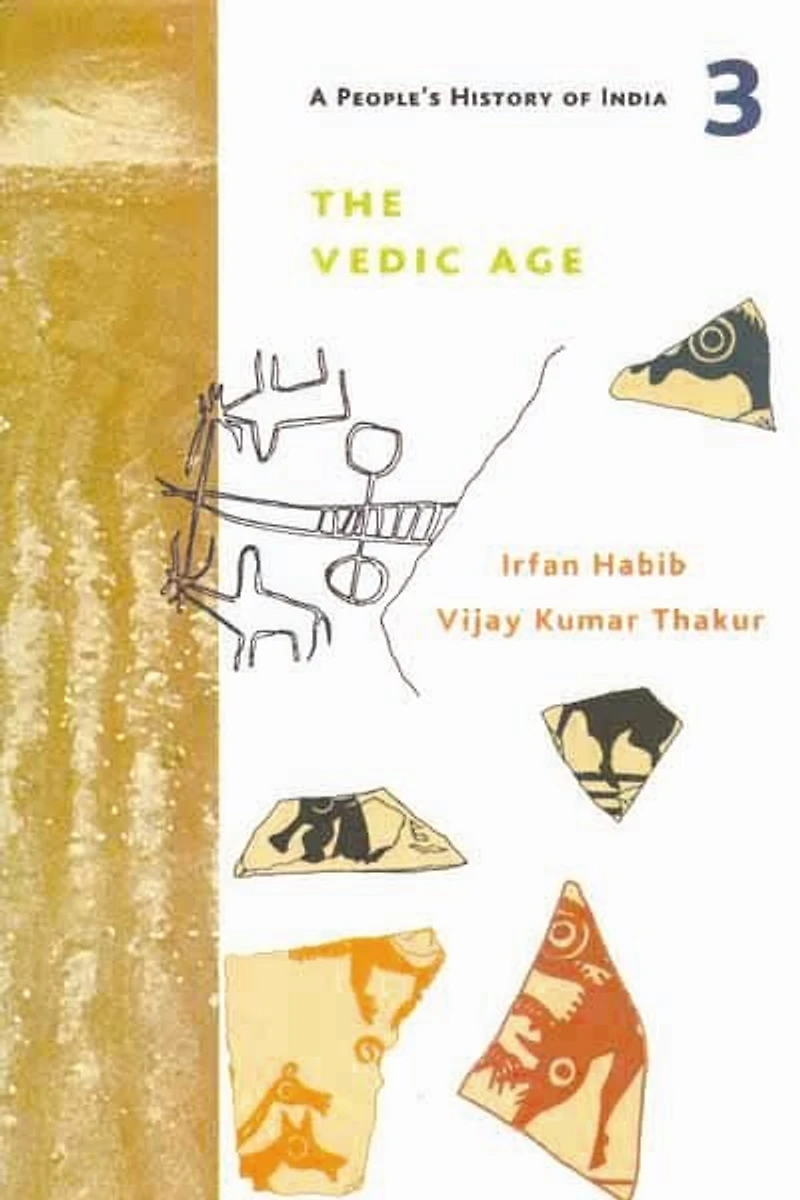
A People's History of India 3: The Vedic Age in Grande Prairie, AB
Current price: $21.97
Coles
A People's History of India 3: The Vedic Age in Grande Prairie, AB
Current price: $21.97
Loading Inventory...
Size: Paperback
*Product information and pricing may vary - to confirm current pricing, availability, shipping, and return information please contact Coles. In the event of a pricing discrepancy, the retailer's price will apply.
The Vedic Age completes the first set of three monographs in the People's History of India series. It deals with the period c. 1500 to c. 700 bc, during which it sets the Rigveda and the subsequent Vedic corpus. It explores aspects of geography, migrations, technology, economy, society, religion, and philosophy. It draws on these texts to reconstruct the life of the ordinary people, with special attention paid to class as well as gender. In a separate chapter, the major regional cultures as revealed by archaeological evidence are carefully described. Much space is devoted to the coming of iron, for the dawn of the Iron Age – though not the Iron Age itself – lay within the period this volume studies. There are special notes on historical geography, the caste system (whose beginnings lay in this period) and the question of epic archaeology. A special feature of this monograph is the inclusion of seven substantive extracts from different sources, which should give the reader a taste of what these texts are like.
The Vedic Age completes the first set of three monographs in the People's History of India series. It deals with the period c. 1500 to c. 700 bc, during which it sets the Rigveda and the subsequent Vedic corpus. It explores aspects of geography, migrations, technology, economy, society, religion, and philosophy. It draws on these texts to reconstruct the life of the ordinary people, with special attention paid to class as well as gender. In a separate chapter, the major regional cultures as revealed by archaeological evidence are carefully described. Much space is devoted to the coming of iron, for the dawn of the Iron Age – though not the Iron Age itself – lay within the period this volume studies. There are special notes on historical geography, the caste system (whose beginnings lay in this period) and the question of epic archaeology. A special feature of this monograph is the inclusion of seven substantive extracts from different sources, which should give the reader a taste of what these texts are like.
You May Also Like








Find at Prairie Mall in Grande Prairie, AB
Visit at Prairie Mall in Grande Prairie, AB