


Gifting Made Simple
Give the Gift of ChoiceClick below to purchase a Prairie Mall eGift Card that can be used at participating retailers at Prairie Mall.Buy Gift CardHome
A New Balance of Payments for the United States, 1790-1919: International Movement Free and Enslaved People, Funds
Coles
Loading Inventory...
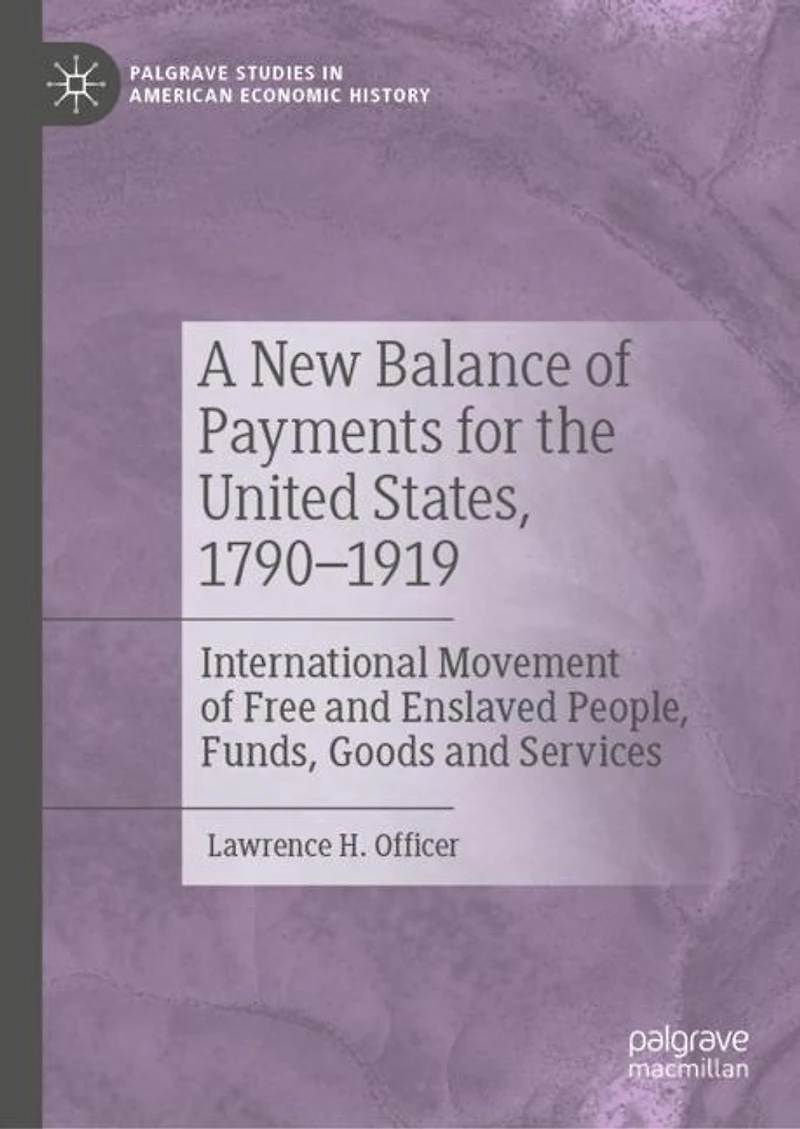
A New Balance of Payments for the United States, 1790-1919: International Movement Free and Enslaved People, Funds in Grande Prairie, AB
Current price: $189.95
Coles
A New Balance of Payments for the United States, 1790-1919: International Movement Free and Enslaved People, Funds in Grande Prairie, AB
Current price: $189.95
Loading Inventory...
Size: Hardcover
*Product information and pricing may vary - to confirm current pricing, availability, shipping, and return information please contact Coles. In the event of a pricing discrepancy, the retailer's price will apply.
This book develops new balance of payments statistics for the United States from 1790 to 1919, before official statistics were kept. Part I of this book justifies construction of a new balance of payments table, and Chapter 1 surveys existing tables from that standpoint. Chapter 2 shows how this book overcomes the limitations of Office of Business Economics and its North-Simon-Goldsmith foundation. Specific features are highlighted, including measurement decisions, improvement of OBE series, development of new series, and derived implications for the structure of the US economy and for the importance of individual sectors that loom large at various times: slave trade, shipping, manufacturing, and travel. The book then generates new time series of the movement of people, the movement of goods, the movement of funds, and the provision of services. Part VI puts the new balance of payments table to use in several ways: aggregates and balances within the table, structure of the US economy, and specific sectors of the economy (slave trade, shipping, manufacturing, travel). Finally, Part VII provides concluding comments.
This book develops new balance of payments statistics for the United States from 1790 to 1919, before official statistics were kept. Part I of this book justifies construction of a new balance of payments table, and Chapter 1 surveys existing tables from that standpoint. Chapter 2 shows how this book overcomes the limitations of Office of Business Economics and its North-Simon-Goldsmith foundation. Specific features are highlighted, including measurement decisions, improvement of OBE series, development of new series, and derived implications for the structure of the US economy and for the importance of individual sectors that loom large at various times: slave trade, shipping, manufacturing, and travel. The book then generates new time series of the movement of people, the movement of goods, the movement of funds, and the provision of services. Part VI puts the new balance of payments table to use in several ways: aggregates and balances within the table, structure of the US economy, and specific sectors of the economy (slave trade, shipping, manufacturing, travel). Finally, Part VII provides concluding comments.
You May Also Like














Find at Prairie Mall in Grande Prairie, AB
Visit at Prairie Mall in Grande Prairie, AB