


Gifting Made Simple
Give the Gift of ChoiceClick below to purchase a Prairie Mall eGift Card that can be used at participating retailers at Prairie Mall.Buy Gift CardHome
A Guide to Organic Chemistry Mechanisms, with Conventional Curved Arrows
Coles
Loading Inventory...
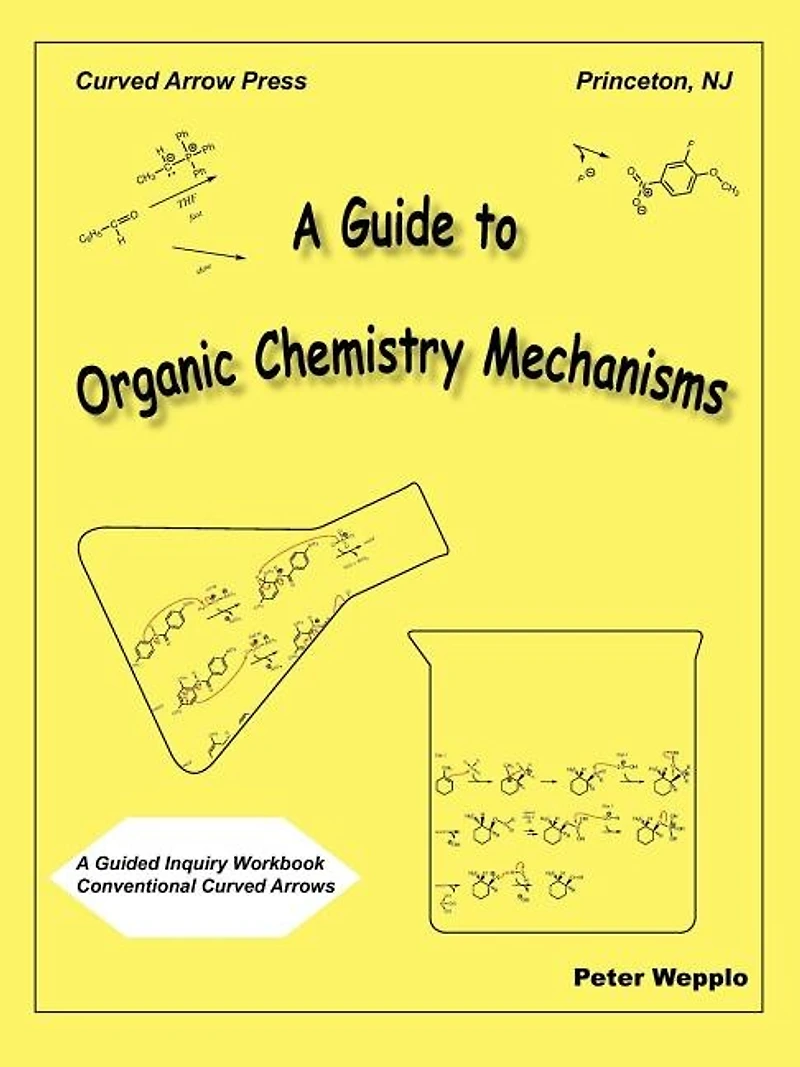
A Guide to Organic Chemistry Mechanisms, with Conventional Curved Arrows in Grande Prairie, AB
Current price: $45.50
Coles
A Guide to Organic Chemistry Mechanisms, with Conventional Curved Arrows in Grande Prairie, AB
Current price: $45.50
Loading Inventory...
Size: Paperback
*Product information and pricing may vary - to confirm current pricing, availability, shipping, and return information please contact Coles. In the event of a pricing discrepancy, the retailer's price will apply.
This is a reaction mechanism workbook designed to accompany a standard organic chemistry textbook. The book presents reaction mechanisms at three levels of difficulty: basic, moderate, and advanced. In Part A, the easiest, the missing curved arrows are missing. In Part B, the same problem is repeated with every other intermediate or product missing. In Part C, the problems are written in textbook fashion, and the same number of arrows have been retained. Thus, you are guided from learning the logic of a reaction to writing a complete mechanism. Once you have mastered a mechanism, you should be able to solve similar problems in your textbook. Part D gives completed mechanisms.
This is a reaction mechanism workbook designed to accompany a standard organic chemistry textbook. The book presents reaction mechanisms at three levels of difficulty: basic, moderate, and advanced. In Part A, the easiest, the missing curved arrows are missing. In Part B, the same problem is repeated with every other intermediate or product missing. In Part C, the problems are written in textbook fashion, and the same number of arrows have been retained. Thus, you are guided from learning the logic of a reaction to writing a complete mechanism. Once you have mastered a mechanism, you should be able to solve similar problems in your textbook. Part D gives completed mechanisms.
You May Also Like








Find at Prairie Mall in Grande Prairie, AB
Visit at Prairie Mall in Grande Prairie, AB