


Gifting Made Simple
Give the Gift of ChoiceClick below to purchase a Prairie Mall eGift Card that can be used at participating retailers at Prairie Mall.Buy Gift CardHome
A Framework for the User-Centered Design of Personalized Hybrid Wearable Robots Gait Rehabilitation
Coles
Loading Inventory...

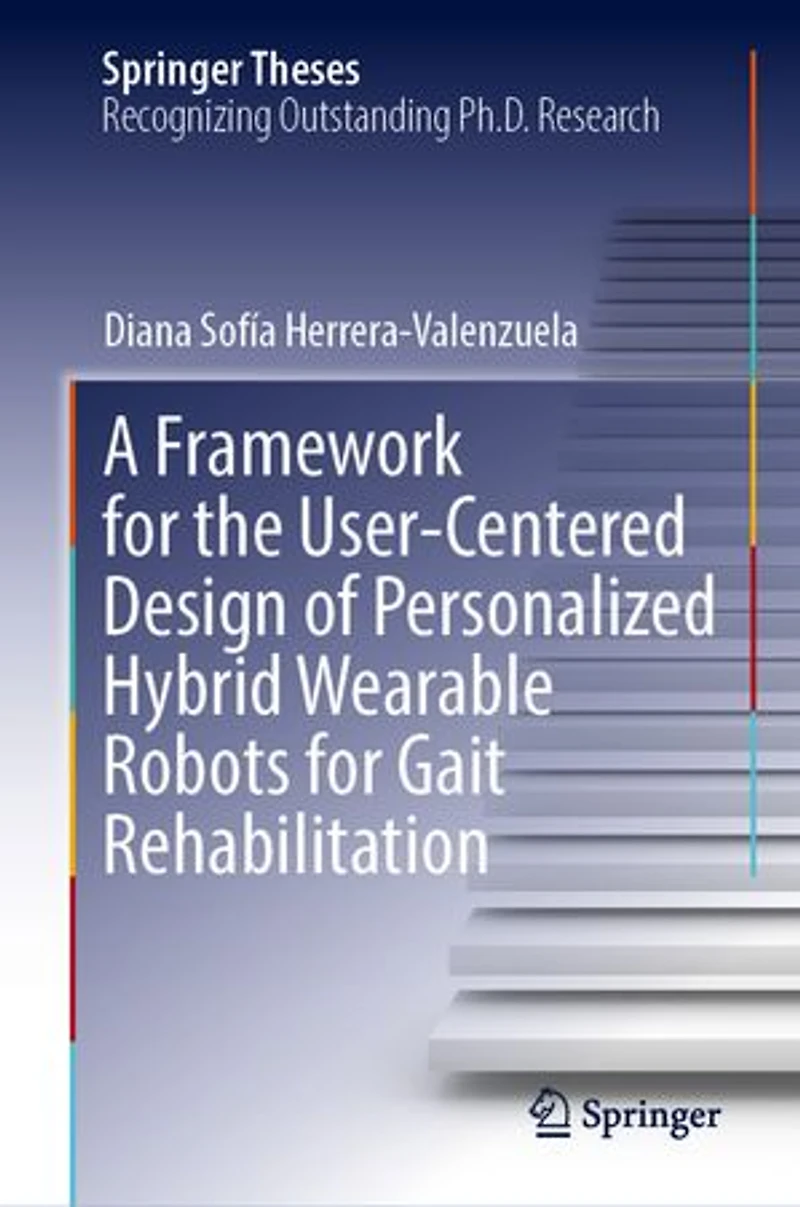
A Framework for the User-Centered Design of Personalized Hybrid Wearable Robots Gait Rehabilitation in Grande Prairie, AB
Current price: $248.50
Coles
A Framework for the User-Centered Design of Personalized Hybrid Wearable Robots Gait Rehabilitation in Grande Prairie, AB
Current price: $248.50
Loading Inventory...
Size: Hardcover
*Product information and pricing may vary - to confirm current pricing, availability, shipping, and return information please contact Coles. In the event of a pricing discrepancy, the retailer's price will apply.
This book provides an in-depth framework for developing personalized hybrid wearable robots to restore walking ability after neurological injuries. Leveraging both data available in the literature and new ones arising from the presented study, it summarizes a set of criteria for guiding design, development, and evaluation of these robotic devices to meet user&s needs. At first, it describes a user-centered approach for designing such devices, in turn it defines novel, comprehensive metrics to monitor gait function during robot-assisted training and after rehabilitation, deriving them from studies on spinal cord injury gait kinematics. Further, it reports on the development and application of experimental protocols for tailoring assistance and on the implementation of a usability evaluation tool to enhance device acceptance and effectiveness.
This book provides an in-depth framework for developing personalized hybrid wearable robots to restore walking ability after neurological injuries. Leveraging both data available in the literature and new ones arising from the presented study, it summarizes a set of criteria for guiding design, development, and evaluation of these robotic devices to meet user&s needs. At first, it describes a user-centered approach for designing such devices, in turn it defines novel, comprehensive metrics to monitor gait function during robot-assisted training and after rehabilitation, deriving them from studies on spinal cord injury gait kinematics. Further, it reports on the development and application of experimental protocols for tailoring assistance and on the implementation of a usability evaluation tool to enhance device acceptance and effectiveness.
You May Also Like















Find at Prairie Mall in Grande Prairie, AB
Visit at Prairie Mall in Grande Prairie, AB