


Gifting Made Simple
Give the Gift of ChoiceClick below to purchase a Prairie Mall eGift Card that can be used at participating retailers at Prairie Mall.Buy Gift CardHome
A First Guide to Computational Modelling Physics
Coles
Loading Inventory...
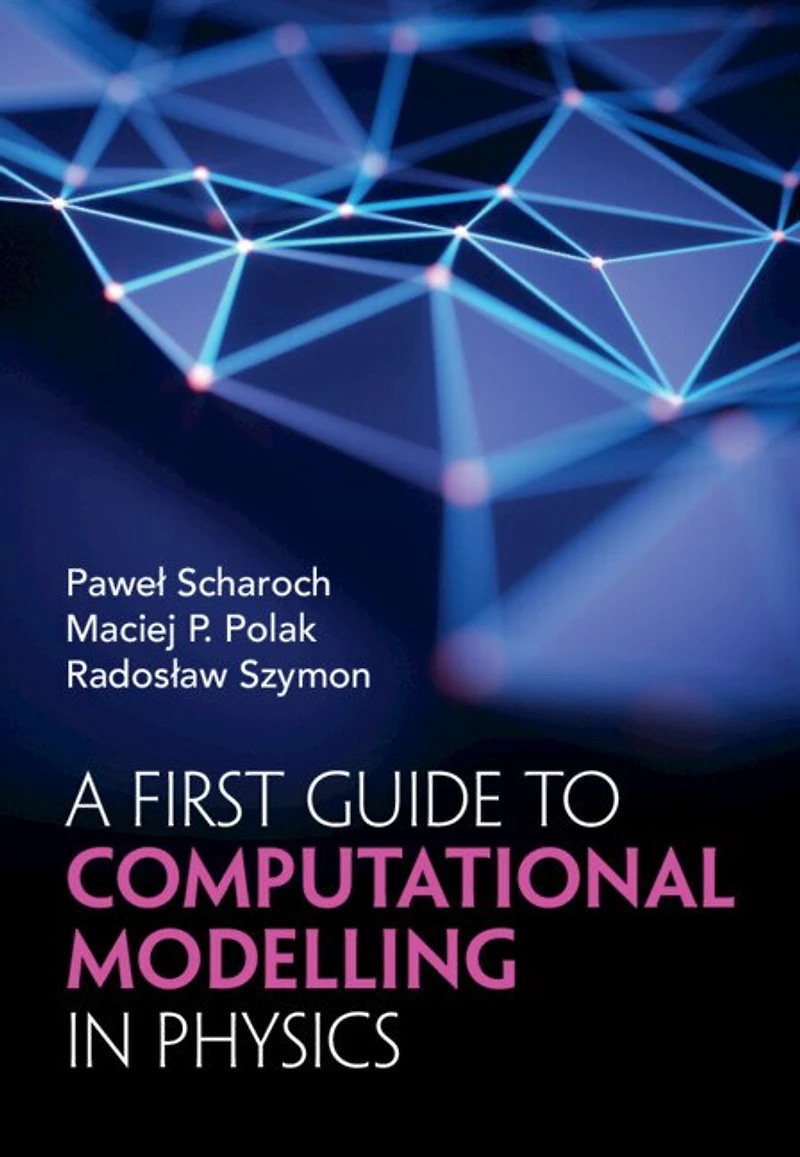
A First Guide to Computational Modelling Physics in Grande Prairie, AB
Current price: $96.95
Coles
A First Guide to Computational Modelling Physics in Grande Prairie, AB
Current price: $96.95
Loading Inventory...
Size: Hardcover
*Product information and pricing may vary - to confirm current pricing, availability, shipping, and return information please contact Coles. In the event of a pricing discrepancy, the retailer's price will apply.
This innovative text helps demystify numerical modelling for early-stage physics and engineering students. It takes a hands-on, project-based approach, with each chapter focusing on an intriguing physics problem taken from classical mechanics, electrodynamics, thermodynamics, astrophysics, and quantum mechanics. To solve these problems, students must apply different numerical methods for themselves, building up their knowledge and practical skills organically. Each project includes a discussion of the fundamentals, the mathematical formulation of the problem, an introduction to the numerical methods and algorithms, and exercises, with solutions available to instructors. The methods presented focus primarily on differential equations, both ordinary and partial, as well as basic mathematical operations. Developed over many years of teaching a computational modelling course, this stand-alone book equips students with an essential numerical modelling toolkit for today's data-driven landscape, and gives them new ways to explore science and engineering.
This innovative text helps demystify numerical modelling for early-stage physics and engineering students. It takes a hands-on, project-based approach, with each chapter focusing on an intriguing physics problem taken from classical mechanics, electrodynamics, thermodynamics, astrophysics, and quantum mechanics. To solve these problems, students must apply different numerical methods for themselves, building up their knowledge and practical skills organically. Each project includes a discussion of the fundamentals, the mathematical formulation of the problem, an introduction to the numerical methods and algorithms, and exercises, with solutions available to instructors. The methods presented focus primarily on differential equations, both ordinary and partial, as well as basic mathematical operations. Developed over many years of teaching a computational modelling course, this stand-alone book equips students with an essential numerical modelling toolkit for today's data-driven landscape, and gives them new ways to explore science and engineering.
You May Also Like








Find at Prairie Mall in Grande Prairie, AB
Visit at Prairie Mall in Grande Prairie, AB