


Gifting Made Simple
Give the Gift of ChoiceClick below to purchase a Prairie Mall eGift Card that can be used at participating retailers at Prairie Mall.Buy Gift CardHome
A Covenant with Color: Race and Social Power in Brooklyn
Coles
Loading Inventory...
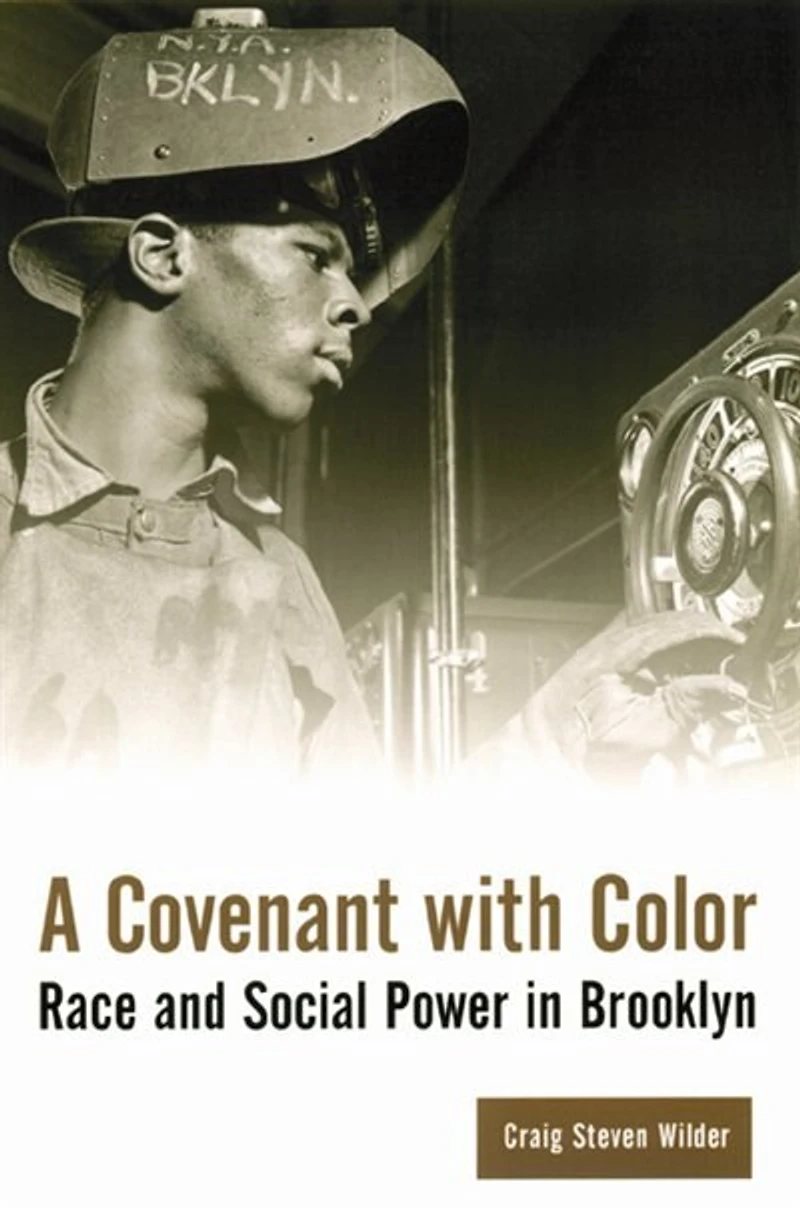
A Covenant with Color: Race and Social Power in Brooklyn in Grande Prairie, AB
Current price: $44.00
Coles
A Covenant with Color: Race and Social Power in Brooklyn in Grande Prairie, AB
Current price: $44.00
Loading Inventory...
Size: Paperback
*Product information and pricing may vary - to confirm current pricing, availability, shipping, and return information please contact Coles. In the event of a pricing discrepancy, the retailer's price will apply.
Spanning three centuries of Brooklyn history from the colonial period to the present, A Covenant with Color exposes the intricate relations of dominance and subordination that have long characterized the relative social positions of white and black Brooklynites. Craig Steven Wilder—examining both quantitative and qualitative evidence and utilizing cutting-edge literature on race theory—demonstrates how ideas of race were born, how they evolved, and how they were carried forth into contemporary society.
In charting the social history of one of the nation's oldest urban locales, Wilder contends that power relations—in all their complexity—are the starting point for understanding Brooklyn's turbulent racial dynamics. He spells out the workings of power—its manipulation of resources, whether in the form of unfree labor, privileges of citizenship, better jobs, housing, government aid, or access to skilled trades. Wilder deploys an extraordinary spectrum of evidence to illustrate the mechanics of power that have kept African American Brooklynites in subordinate positions: from letters and diaries to family papers of Kings County's slaveholders, from tax records to the public archives of the Home Owners Loan Corporation.
Wilder illustrates his points through a variety of cases, including banking interests, the rise of Kings County's colonial elite, industrialization and slavery, race-based distribution of federal money in jobs, and mortgage loans during and after the Depression. He delves into the evolution of the Brooklyn ghetto, tracing how housing segregation corralled African Americans in Bedford-Stuyvesant. The book explores colonial enslavement, the rise of Jim Crow, labor discrimination and union exclusion, and educational inequality. Throughout, Wilder uses Brooklyn as a lens through which to view larger issues of race and power on a national level.
One of the few recent attempts to provide a comprehensive history of race relations in an American city, A Covenant with Color is a major contribution to urban history and the history of race and class in America.
Spanning three centuries of Brooklyn history from the colonial period to the present, A Covenant with Color exposes the intricate relations of dominance and subordination that have long characterized the relative social positions of white and black Brooklynites. Craig Steven Wilder—examining both quantitative and qualitative evidence and utilizing cutting-edge literature on race theory—demonstrates how ideas of race were born, how they evolved, and how they were carried forth into contemporary society.
In charting the social history of one of the nation's oldest urban locales, Wilder contends that power relations—in all their complexity—are the starting point for understanding Brooklyn's turbulent racial dynamics. He spells out the workings of power—its manipulation of resources, whether in the form of unfree labor, privileges of citizenship, better jobs, housing, government aid, or access to skilled trades. Wilder deploys an extraordinary spectrum of evidence to illustrate the mechanics of power that have kept African American Brooklynites in subordinate positions: from letters and diaries to family papers of Kings County's slaveholders, from tax records to the public archives of the Home Owners Loan Corporation.
Wilder illustrates his points through a variety of cases, including banking interests, the rise of Kings County's colonial elite, industrialization and slavery, race-based distribution of federal money in jobs, and mortgage loans during and after the Depression. He delves into the evolution of the Brooklyn ghetto, tracing how housing segregation corralled African Americans in Bedford-Stuyvesant. The book explores colonial enslavement, the rise of Jim Crow, labor discrimination and union exclusion, and educational inequality. Throughout, Wilder uses Brooklyn as a lens through which to view larger issues of race and power on a national level.
One of the few recent attempts to provide a comprehensive history of race relations in an American city, A Covenant with Color is a major contribution to urban history and the history of race and class in America.
You May Also Like










Find at Prairie Mall in Grande Prairie, AB
Visit at Prairie Mall in Grande Prairie, AB