


Gifting Made Simple
Give the Gift of ChoiceClick below to purchase a Prairie Mall eGift Card that can be used at participating retailers at Prairie Mall.Buy Gift CardHome
30 Days a Black Man: the Forgotten Story That Exposed Jim Crow South
Coles
Loading Inventory...
30 Days a Black Man: the Forgotten Story That Exposed Jim Crow South in Grande Prairie, AB
Current price: $64.95
Coles
30 Days a Black Man: the Forgotten Story That Exposed Jim Crow South in Grande Prairie, AB
Current price: $64.95
Loading Inventory...
Size: Audiobook (2017 A)
*Product information and pricing may vary - to confirm current pricing, availability, shipping, and return information please contact Coles. In the event of a pricing discrepancy, the retailer's price will apply.
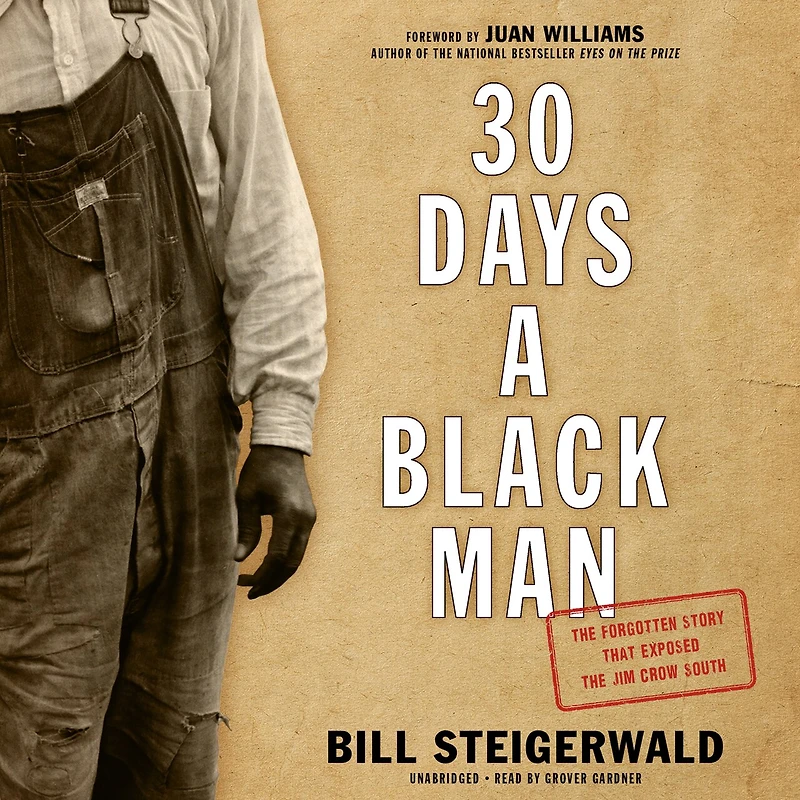
In 1948, most white people in the North had no idea how unjust and unequal daily life was for the ten million African Americans living in the South. But that suddenly changed after Ray Sprigle, a famous white journalist from Pittsburgh, went undercover and lived as a black man in the Jim Crow South. Escorted through the South’s parallel black society by John Wesley Dobbs, a historic black civil-rights pioneer from Atlanta, Sprigle met with sharecroppers, local black leaders, and families of lynching victims. He visited ramshackle black schools and slept at the homes of prosperous black farmers and doctors. The Pittsburgh Post-Gazette reporter’s series was syndicated coast to coast in white newspapers and carried into the South only by the Pittsburgh Courier , the country’s leading black paper. His vivid descriptions and undisguised outrage at “the iniquitous Jim Crow system” shocked the North, enraged the South, and ignited the first national debate in the media about ending America’s system of apartheid. Six years before Brown v. Board of Education , seven before the murder of Emmett Till, and thirteen before John Howard Griffin’s similar experiment became the bestseller Black Like Me , Sprigle’s intrepid journalism blasted into the American consciousness the grim reality of black lives in the South.
In 1948, most white people in the North had no idea how unjust and unequal daily life was for the ten million African Americans living in the South. But that suddenly changed after Ray Sprigle, a famous white journalist from Pittsburgh, went undercover and lived as a black man in the Jim Crow South. Escorted through the South’s parallel black society by John Wesley Dobbs, a historic black civil-rights pioneer from Atlanta, Sprigle met with sharecroppers, local black leaders, and families of lynching victims. He visited ramshackle black schools and slept at the homes of prosperous black farmers and doctors. The Pittsburgh Post-Gazette reporter’s series was syndicated coast to coast in white newspapers and carried into the South only by the Pittsburgh Courier , the country’s leading black paper. His vivid descriptions and undisguised outrage at “the iniquitous Jim Crow system” shocked the North, enraged the South, and ignited the first national debate in the media about ending America’s system of apartheid. Six years before Brown v. Board of Education , seven before the murder of Emmett Till, and thirteen before John Howard Griffin’s similar experiment became the bestseller Black Like Me , Sprigle’s intrepid journalism blasted into the American consciousness the grim reality of black lives in the South.
You May Also Like













Find at Prairie Mall in Grande Prairie, AB
Visit at Prairie Mall in Grande Prairie, AB